PHASE Research Group
The Progressive High-speed Applied Simulations and Experiments (PHASE) research group, directed by Professor Liselle Joseph, focuses on multi-physics research examining the fundamental nature of high-speed flows. Our research is affiliated with the Aerospace and Ocean Engineering department (AOE) and the National Security Institute (VT-NSI) at Virginia Tech. Our goals and priorities are captured in the group’s name:
Progressive: PHASE research is focused on forward-facing, next-generation solutions to fundamental high-speed problems. A core value of the group is to pursue physics-based solutions which can be translated to practically useful, robust engineering applications. Similarly, our software development solutions are rooted in Digital Engineering principles such as modularity, sustainability, usability, and re-usability.
High-speed: Our research primarily investigates the phenomenology of supersonic and hypersonic flows. Our current priorities are in the hypersonic regime.
Applied: Most academic research, including research at PHASE, involves theoretical work aimed at acquiring new knowledge of the underlying phenomena without a particular application in mind (basic research). The PHASE group also prioritizes applied research which involves original investigations aimed primarily towards a specific, practical aim or objective. Our applied research efforts, affiliated with VT-NSI, are typically in close collaboration with leading industry partners and Department of Defense agencies and aim to address specific needs of the community.
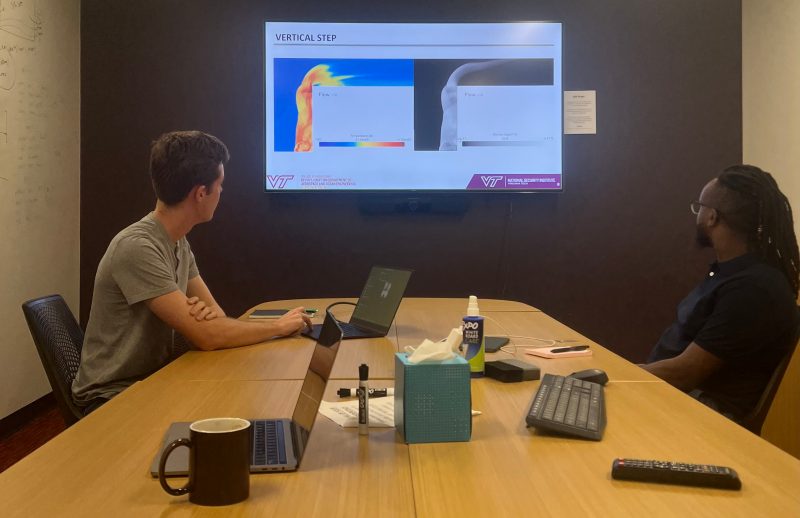
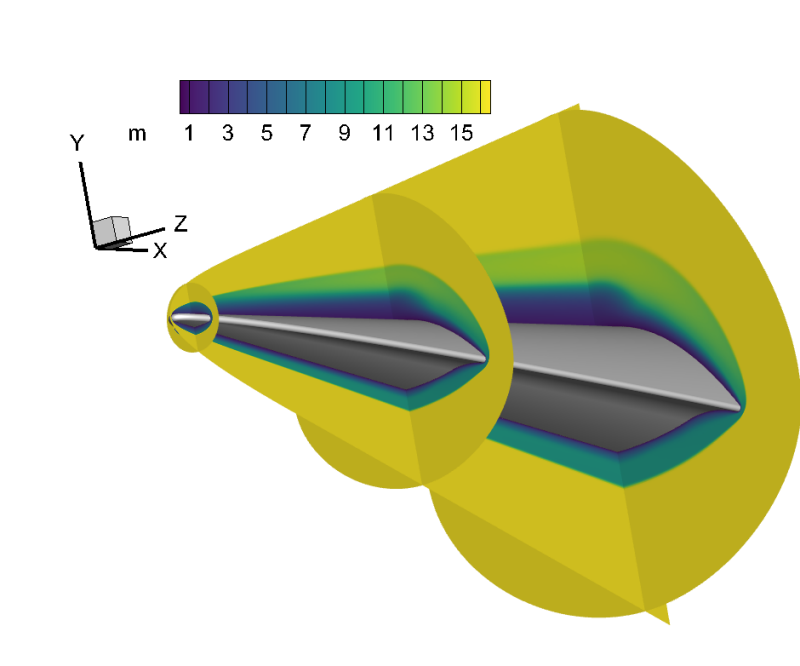
Simulations: One arm of our research focuses on using Computational Fluid Dynamics (CFD) and other physics-based models to investigate the nature of high-speed flows.
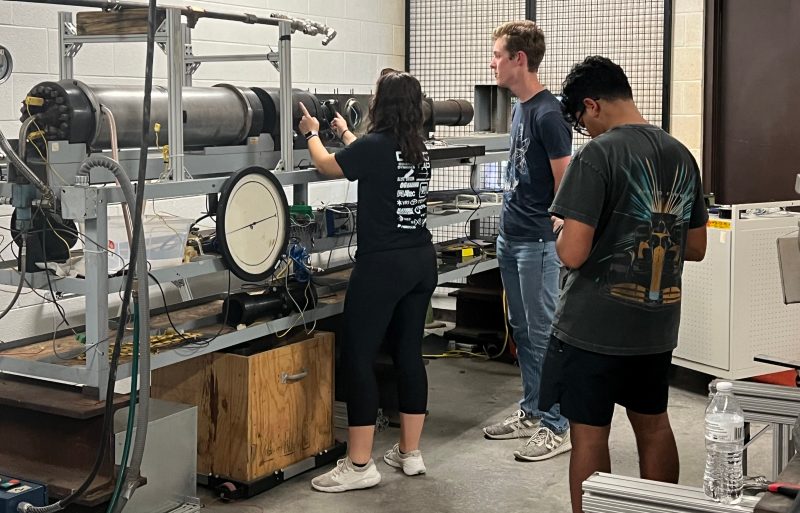
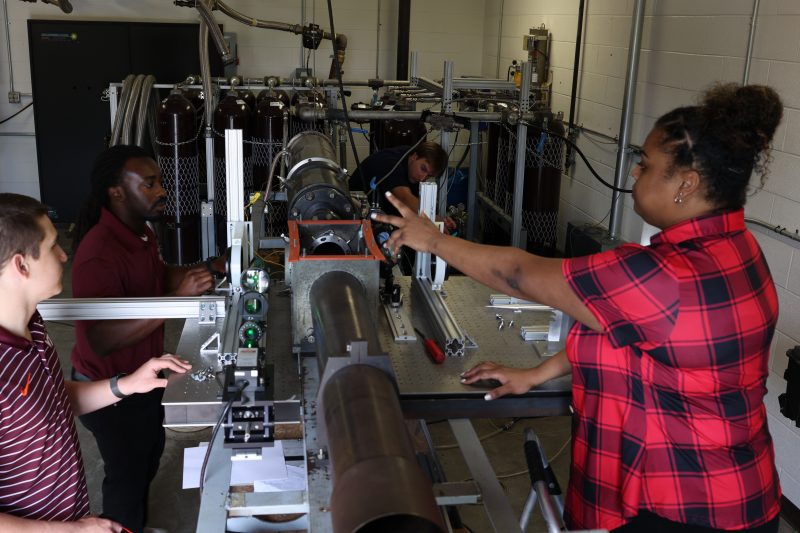
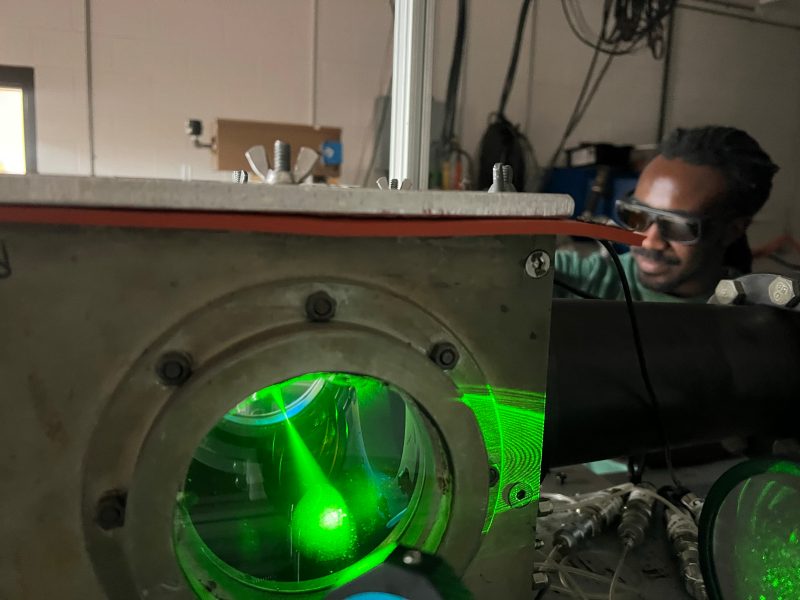
Experiments: The second arm of our research involves systematic, robust testing in the Hypersonic Wind Tunnel at Virginia Tech. Our experiments used advanced instrumentation to explore fundamental flowfield behaviour.
Details coming soon...
Journal Articles
- 2022. Joseph, Liselle A., William J. Devenport, and Stewart Glegg. “Empirical Model for Low-Speed Rough-Wall Turbulent Boundary Layer Pressure Spectra.” AIAA Journal 60 (4): 2160–68. https://doi.org/10.2514/1.J060965.
- 2021. Joseph, Liselle A., and William J. Devenport. “The Low-Frequency Pressure Fluctuations of near-Equilibrium Turbulent Boundary Layers.” Experiments in Fluids 62 (5): 105. https://doi.org/10.1007/s00348-021-03182-y.
- 2021. Evans, Simon, Junsok Yi, Sean Nolan, Liselle Joseph, Michael Ni, and Sameer Kulkarni. “Modeling of Axial Compressor With Large Tip Clearances.” Journal of Turbomachinery 143 (061007). https://doi.org/10.1115/1.4050117.
- 2020. Joseph, Liselle A., Nicholas J. Molinaro, William J. Devenport, and Timothy W. Meyers. “Characteristics of the Pressure Fluctuations Generated in Turbulent Boundary Layers over Rough Surfaces.” Journal of Fluid Mechanics 883. https://doi.org/10.1017/jfm.2019.813
- 2016. Joseph, Liselle A., Aurelien Borgoltz, and William Devenport. “Infrared Thermography for Detection of Laminar–Turbulent Transition in Low-Speed Wind Tunnel Testing.” Experiments in Fluids 57 (5): 77. https://doi.org/10.1007/s00348-016-2162-4.
Conference Proceedings
- 2018. Repasky, Russell J., Liselle A. Joseph, Nicholas J. Molinaro, and William J. Devenport. “The Large Scale Structures of a High Reynolds Number Turbulent Boundary Layer over Rough Surfaces.” In 2018 AIAA/CEAS Aeroacoustics Conference. Atlanta, Georgia: American Institute of Aeronautics and Astronautics. https://doi.org/10.2514/6.2018-3934.
- 2018. Balantrapu, N. Agastya, Russell J. Repasky, Liselle A. Joseph, and William J. Devenport. “The Dynamic Response of a Pinhole Microphone under Flows of Varying Shear Stress.” In 2018 AIAA/CEAS Aeroacoustics Conference. Atlanta, Georgia: American Institute of Aeronautics and Astronautics. https://doi.org/10.2514/6.2018-3933.
- 2016. Joseph, Liselle A., Timothy W. Meyers, Nicholas J. Molinaro, and William J. Devenport. “Pressure Fluctuations in a High-Reynolds-Number Turbulent Boundary Layer Flow over Rough Surfaces.” In 22nd AIAA/CEAS Aeroacoustics Conference. Lyon, France: American Institute of Aeronautics and Astronautics. https://doi.org/10.2514/6.2016-2751.
- 2015. Joseph, Liselle A., Julien Fenouil, Aurelien Borgoltz, and William J. Devenport. “Aerodynamic Effects of Roughness on Wind Turbine Blade Sections.” In 33rd AIAA Applied Aerodynamics Conference. Dallas, TX: American Institute of Aeronautics and Astronautics. https://doi.org/10.2514/6.2015-3384.
- 2015. Devenport, William, Liselle Joseph, and Russell Repasky. “Establishing Universal Scaling Laws for Pressure Fluctuations in High Reynolds Number Rough Wall Turbulent Boundary Layers N00014-15-1-2247.” Measurements 268:261–93.
Patents, Datasets, & Industry Programs
- 2023. Woldman, Alexandra, and Liselle Joseph. “Automated Full Trajectory Aero-Thermo-Mechanical Simulation Coupling for Hypersonic Flight.” SSI Contract # N68335-22-C-0486.
- 2022. Stelter, David, and Liselle Joseph. “Data-Driven Hypersonic Turbulence Modeling Toolset.” SSI Contract # N68335-22-C-0271.
- 2022. Joseph, Liselle, Timothy Deschenes, Graham Candler, and Pramod Subbareddy. “Development of Predictive Aero-Optical Models of the Hypersonic Environment.” SSI Contract # N68335-22-C-0052.
- 2022. Joseph, Liselle, and Pramod Subbareddy. “Time-Accurate Modeling for Hypersonic Morphing Vehicles.” Phase I&II. Burlington, MA: DoD STTR.
- 2022. Deschenes, Timothy, Jason Bender, Liselle Joseph, Alexandra Woldman, Matthew Bartkowicz, and Vladimir Gidzak. “Prediction of Hypersonic Cruise Missile Signatures with Advanced Chemistry and Radiation Modules: SBIR Phase I Final Report.” SSI Contract # HQ0860-22-C-7049
- 2021. Deschenes, Timothy, Brandon Smith, Vladimir Gidzak, Matthew Bartkowicz, Liselle Joseph, Alexandra Woldman, Jonathan Grot, and Anthony Knutson. “Recent Development and Application of Advanced Software Tools for Hypersonic Flowfields and Signatures.”
- 2020. Chuang, Sue-Li, John Logan Whelan, Mark A. Stephens, Kenneth P. Clark, Liselle A. Joseph, and James A. Eley. Fan blades with recessed surfaces. United States US20200232330A1, filed January 18, 2019, and issued July 23, 2020. https://patents.google.com/patent/US20200232330A1/en.
Thesis & Dissertations
- 2017. Joseph, Liselle A. “Pressure Fluctuations in a High-Reynolds-Number Turbulent Boundary Layer over Rough Surfaces of Different Configurations,” October. https://vtechworks.lib.vt.edu/handle/10919/79630.
- 2014. Joseph, Liselle A. “Transition Detection for Low Speed Wind Tunnel Testing Using Infrared Thermography.”

Principal Investigator

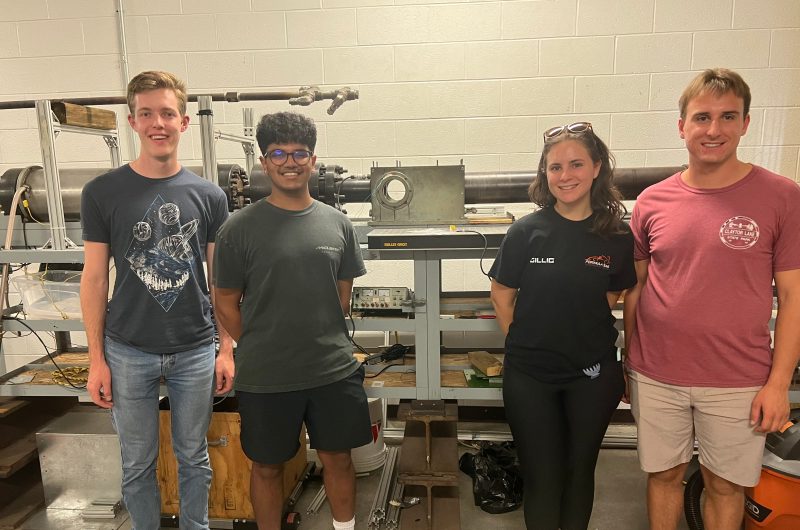
Prof. Joseph is the director of the PHASE research group and Virginia Tech's hypersonic wind tunnel. Her research interests include hypersonic aerodyanmics, ablation, and turbulence. She has a strong background in wind tunnel experiments, instrumentation development, and compressor rig testing. Before returning to academia, Dr. Joseph worked for over 6 years in the industry, first Pratt & Whitney compression systems and then Spectral Sciences Inc. Outside work, she enjoys experiencing different cultures and spending time in nature.
Graduate Researchers
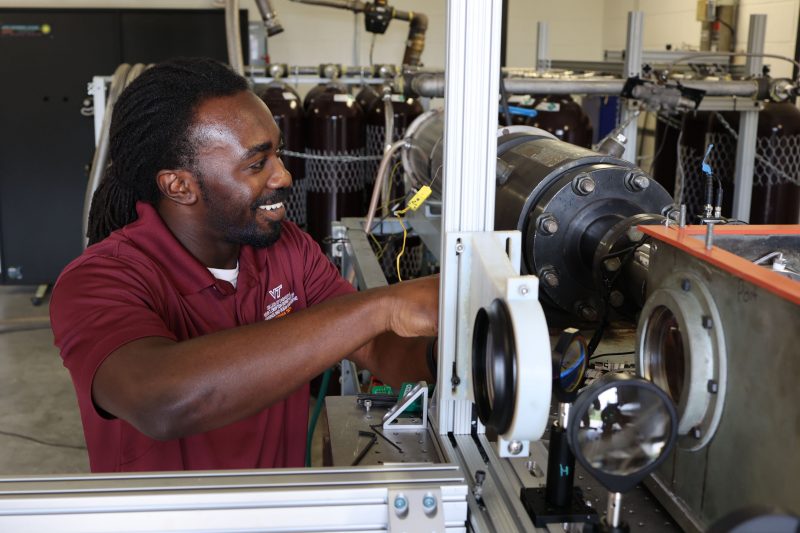
Devon Daniels (PhD Student, VT AOE, Class 2028)
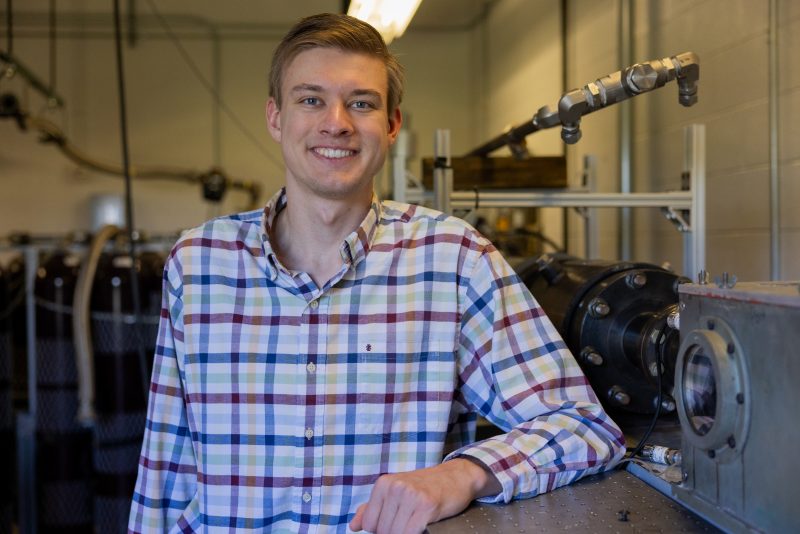
Gavin Hunt: Gavin is a first year PhD student studying hypersonic boundary layer development and advanced optical setups. He received his BS in mechanical engineering from Clemson University in 2024. Outside of class Gavin enjoys hiking, swimming, fishing, and reading.

Khanh Nguyen (PhD Student, VT AOE, Class 2028)

Jachin Calhoun: Jachin is an MS student focusing on CFD simulations of hypersonic roughness effects, with particular emphasis on identifying the errors within current roughness function implementations. He earned his B.S. in 2025.
Undergraduate Researchers

Jeffrey Filer: Jeffrey is a rising senior in AOE using CFD to quantify the effect of manufacturing defects for hypersonic vehicles. He is interested in how modeling can be applied to the next generation of high-speed systems.
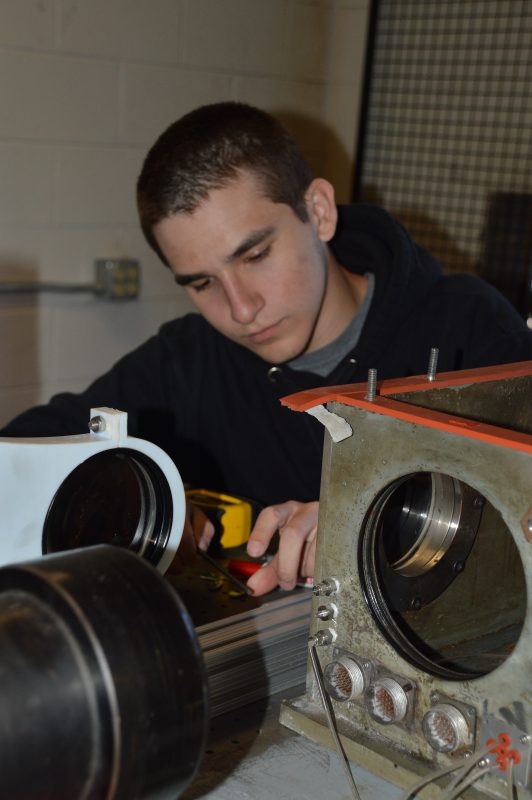
Bryan Tomer: Bryan is a Junior in AOE and a DoD 2025 SMART scholarship recipient (MDA). With PHASE, he has developed postprocessing codes for the wind tunnel and is currently researching hypersonic aeroptic effects. Outside of school Bryan enjoys star gazing, playing with his dog, and photography.
PHASE'd Researchers (Alumni)
- Chad Noyes, BS Aerospace Engineering, Class 2025; Now at Florida Tech
- Giovanni Morris, BS Aerospace Engineering, Class of 2025; Now at GE
Interested in Joining PHASE?
PHASE is always open to working with highly driven and dedicated undergraduate and graduate students. Our current projects focus on experimental testing of hypersonic flows.
Prospective graduate students who want to work on challenging problems in this field should reach out to Professor Joseph directly via email.
Interested in Undergraduate research in PHASE? Email your resume and a completed application form (download below) to Dr. Joseph.